Non-Woven Bags vs Plastic Bags: Which is Better for the Environment?
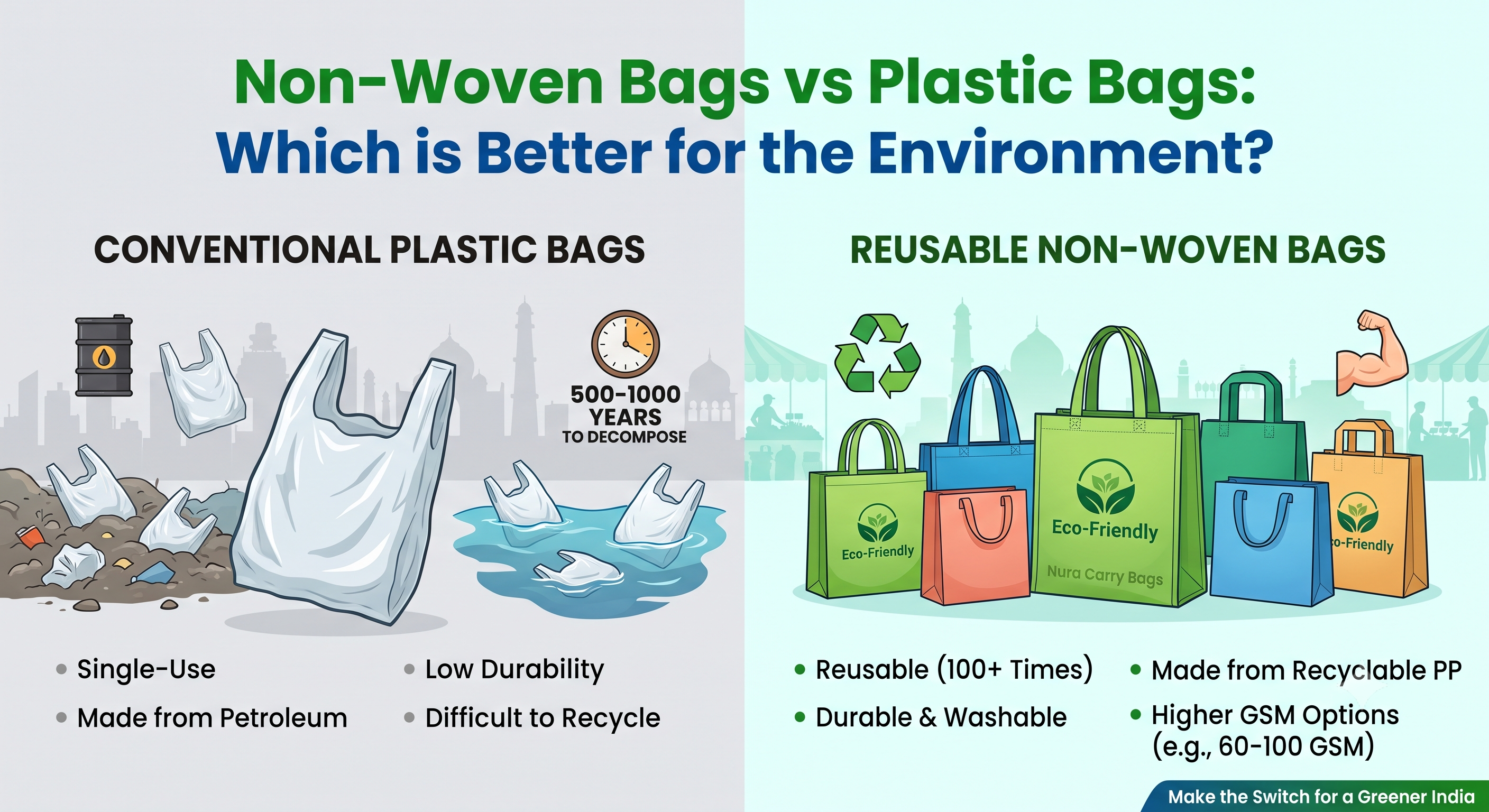
Walk into any retail store, grocery shop, or garment outlet in India today, and you'll notice something has changed at the billing counter. The thin, crinkly plastic bag that once came free with every purchase is disappearing - replaced by a thicker, cloth-like carry bag. That's a non-woven bag, and it's rapidly becoming the standard across Indian businesses.
But is this switch just a trend, or is it justified? Are non-woven bags really better than plastic bags? In this article, we explain whether non-woven bags are eco-friendly, whether plastic bags are banned in India in 2026, how much non-woven bags cost, and how long they last.
WHAT IS A NON-WOVEN BAG?
A non-woven bag is a reusable carry bag made of non-woven polypropylene material, formed by bonding fibers together using heat or chemical treatment. The name "non-woven" comes from the fact that these bags are not made by weaving or knitting like traditional cloth.
Non-woven bags look like soft fabric, unlike thin plastic bags. They are long-lasting, which makes them a better alternative to plastic for use in retail stores, garment shops, and supermarkets in India.
They come in various styles and thicknesses, can be customized with printing, and are a great way to market your brand.
WHAT ARE PLASTIC BAGS MADE OF?
Conventional plastic bags are made of polyethylene (most commonly LDPE or HDPE) sourced directly from oil. This process relies on blowing melted plastic into thin sheets, making plastic bags very cheap and quick to produce.
This production process is inexpensive and fast, which is why plastic bags have become so common in our everyday lives - but they are harmful to our environment.
ENVIRONMENTAL IMPACT COMPARISON
Decomposition Time
This is the starkest difference between the two. A standard plastic bag can take anywhere from 500 to 1,000 years to fully decompose in a landfill.
Non-woven bags, while still made from polypropylene, are far more likely to be reused dozens or hundreds of times before disposal, so fewer bags end up in landfills, causing less harm to the environment. Some non-woven fabrics are also available in biodegradable variants.
Carbon Footprint of Production
Production of non-woven bags generates a higher upfront carbon footprint compared to plastic bags, but because they are durable and one bag can replace 50-100 plastic bags, they are less harmful to the environment overall.
Recyclability
Both materials are technically recyclable, but in practice, thin plastic bags are rarely collected and recycled - they are lightweight, get contaminated easily, and clog recycling machinery.
Non-woven bags, being thicker and more durable, are easier to collect, sort, and reprocess through PP recycling streams.
DURABILITY AND REUSABILITY COMPARED
This is where non-woven bags win decisively. A plastic bag is designed for one or two uses before it tears.
A well-made non-woven bag, especially one in the 60-100 GSM range, can comfortably handle daily use for months - carrying groceries, books, clothes, or retail purchases without ripping at the seams.
For a retailer, this also becomes a branding opportunity: every time the bag is reused, your name is seen again.
NON-WOVEN BAGS VS PLASTIC BAGS: COST AND PRICE
Plastic bags are cheaper than non-woven bags, which is why many retailers hesitate to switch.
But because non-woven bags are used multiple times, they are more cost-effective in the long run.
And when non-woven bags are bought in bulk, the cost difference narrows significantly.
Regulatory Risk
Fines and seizures for using banned plastic in states that enforce the ban make plastic bags more costly for retailers.
Replacement Frequency
Plastic bags need constant restocking due to high usage volume and low utility per bag.
Brand Perception
Non-woven bags are increasingly seen as a sign of a responsible, modern business.
LEGAL STATUS IN INDIA
India banned specific single-use plastic items nationally in July 2022, and several states have gone further with their own restrictions on plastic bags below a certain thickness or micron level.
Enforcement varies by state and municipality, but the direction is consistent: plastic carry bags are being phased out, and non-woven bags are one of the primary approved alternatives.
Businesses that switch early avoid last-minute compliance issues, fines, and stock disruptions when enforcement tightens in their region.
ARE NON-WOVEN BAGS BANNED IN INDIA?
No, plastic bags below a specific thickness are banned. Non-woven bags are a great alternative to plastic bags because they are made of thicker fabric which is not covered by these restrictions.
In fact, the government recognizes non-woven bags as one of the best alternatives to plastic bags.
However, some states have proposed stricter GSM or thickness requirements even for non-woven bags to prevent low-quality, non-reusable versions from being sold as "eco-friendly" - so choose a manufacturer who complies with all legal norms.
WHICH ONE SHOULD YOUR BUSINESS CHOOSE?
If you are a retailer, distributor, or any institution still relying on plastic carry bags, you should choose non-woven bags because they are long-lasting, a great way to market your brand, have a lower environmental impact, and comply with legal rules and regulations.
The switch also becomes easier than expected once you source from a manufacturer who can match bag size, GSM, and print quality to your specific business needs - grocery stores need different specs than garment shops or event organizers.
FREQUENTLY ASKED QUESTIONS
Are non-woven bags 100% biodegradable?
Non-woven bags sold in the market are not fully biodegradable, but they are durable, reusable, and recyclable. Biodegradable variants are available on request.
Is it legal to use plastic bags in India in 2026?
Many categories of plastic bags are banned at the national level, and each state has its own restrictions on the use of plastic bags and their thickness. So before placing an order for plastic bags, check the rules of your specific state.
How many times can a non-woven bag be reused?
With normal care, a good-quality non-woven bag (60 GSM or higher) can typically be reused 50 to 100+ times before it wears out.
Are non-woven bags more expensive than plastic bags?
Per unit, yes. But factoring in reusability, compliance, and brand value, non-woven bags offer significantly better long-term value for businesses.
Can non-woven bags hold heavy items like plastic bags?
Yes, non-woven bags are suitable for carrying heavy items just like plastic bags.
Are non-woven bags eco-friendly?
Yes, non-woven bags are eco-friendly because they are reusable and recyclable, and they are even more biodegradable compared to plastic bags.
READY TO SWITCH YOUR STORE TO NON-WOVEN BAGS?
Nura Carry Bags manufactures and supplies custom non-woven carry bags in bulk across India - in the size, GSM, and print your business needs.
Contact us today for a free quote.
Back to Blogs
But is this switch just a trend, or is it justified? Are non-woven bags really better than plastic bags? In this article, we explain whether non-woven bags are eco-friendly, whether plastic bags are banned in India in 2026, how much non-woven bags cost, and how long they last.
WHAT IS A NON-WOVEN BAG?
A non-woven bag is a reusable carry bag made of non-woven polypropylene material, formed by bonding fibers together using heat or chemical treatment. The name "non-woven" comes from the fact that these bags are not made by weaving or knitting like traditional cloth.
Non-woven bags look like soft fabric, unlike thin plastic bags. They are long-lasting, which makes them a better alternative to plastic for use in retail stores, garment shops, and supermarkets in India.
They come in various styles and thicknesses, can be customized with printing, and are a great way to market your brand.
WHAT ARE PLASTIC BAGS MADE OF?
Conventional plastic bags are made of polyethylene (most commonly LDPE or HDPE) sourced directly from oil. This process relies on blowing melted plastic into thin sheets, making plastic bags very cheap and quick to produce.
This production process is inexpensive and fast, which is why plastic bags have become so common in our everyday lives - but they are harmful to our environment.
ENVIRONMENTAL IMPACT COMPARISON
Decomposition Time
This is the starkest difference between the two. A standard plastic bag can take anywhere from 500 to 1,000 years to fully decompose in a landfill.
Non-woven bags, while still made from polypropylene, are far more likely to be reused dozens or hundreds of times before disposal, so fewer bags end up in landfills, causing less harm to the environment. Some non-woven fabrics are also available in biodegradable variants.
Carbon Footprint of Production
Production of non-woven bags generates a higher upfront carbon footprint compared to plastic bags, but because they are durable and one bag can replace 50-100 plastic bags, they are less harmful to the environment overall.
Recyclability
Both materials are technically recyclable, but in practice, thin plastic bags are rarely collected and recycled - they are lightweight, get contaminated easily, and clog recycling machinery.
Non-woven bags, being thicker and more durable, are easier to collect, sort, and reprocess through PP recycling streams.
DURABILITY AND REUSABILITY COMPARED
This is where non-woven bags win decisively. A plastic bag is designed for one or two uses before it tears.
A well-made non-woven bag, especially one in the 60-100 GSM range, can comfortably handle daily use for months - carrying groceries, books, clothes, or retail purchases without ripping at the seams.
For a retailer, this also becomes a branding opportunity: every time the bag is reused, your name is seen again.
NON-WOVEN BAGS VS PLASTIC BAGS: COST AND PRICE
Plastic bags are cheaper than non-woven bags, which is why many retailers hesitate to switch.
But because non-woven bags are used multiple times, they are more cost-effective in the long run.
And when non-woven bags are bought in bulk, the cost difference narrows significantly.
Regulatory Risk
Fines and seizures for using banned plastic in states that enforce the ban make plastic bags more costly for retailers.
Replacement Frequency
Plastic bags need constant restocking due to high usage volume and low utility per bag.
Brand Perception
Non-woven bags are increasingly seen as a sign of a responsible, modern business.
LEGAL STATUS IN INDIA
India banned specific single-use plastic items nationally in July 2022, and several states have gone further with their own restrictions on plastic bags below a certain thickness or micron level.
Enforcement varies by state and municipality, but the direction is consistent: plastic carry bags are being phased out, and non-woven bags are one of the primary approved alternatives.
Businesses that switch early avoid last-minute compliance issues, fines, and stock disruptions when enforcement tightens in their region.
ARE NON-WOVEN BAGS BANNED IN INDIA?
No, plastic bags below a specific thickness are banned. Non-woven bags are a great alternative to plastic bags because they are made of thicker fabric which is not covered by these restrictions.
In fact, the government recognizes non-woven bags as one of the best alternatives to plastic bags.
However, some states have proposed stricter GSM or thickness requirements even for non-woven bags to prevent low-quality, non-reusable versions from being sold as "eco-friendly" - so choose a manufacturer who complies with all legal norms.
WHICH ONE SHOULD YOUR BUSINESS CHOOSE?
If you are a retailer, distributor, or any institution still relying on plastic carry bags, you should choose non-woven bags because they are long-lasting, a great way to market your brand, have a lower environmental impact, and comply with legal rules and regulations.
The switch also becomes easier than expected once you source from a manufacturer who can match bag size, GSM, and print quality to your specific business needs - grocery stores need different specs than garment shops or event organizers.
FREQUENTLY ASKED QUESTIONS
Are non-woven bags 100% biodegradable?
Non-woven bags sold in the market are not fully biodegradable, but they are durable, reusable, and recyclable. Biodegradable variants are available on request.
Is it legal to use plastic bags in India in 2026?
Many categories of plastic bags are banned at the national level, and each state has its own restrictions on the use of plastic bags and their thickness. So before placing an order for plastic bags, check the rules of your specific state.
How many times can a non-woven bag be reused?
With normal care, a good-quality non-woven bag (60 GSM or higher) can typically be reused 50 to 100+ times before it wears out.
Are non-woven bags more expensive than plastic bags?
Per unit, yes. But factoring in reusability, compliance, and brand value, non-woven bags offer significantly better long-term value for businesses.
Can non-woven bags hold heavy items like plastic bags?
Yes, non-woven bags are suitable for carrying heavy items just like plastic bags.
Are non-woven bags eco-friendly?
Yes, non-woven bags are eco-friendly because they are reusable and recyclable, and they are even more biodegradable compared to plastic bags.
READY TO SWITCH YOUR STORE TO NON-WOVEN BAGS?
Nura Carry Bags manufactures and supplies custom non-woven carry bags in bulk across India - in the size, GSM, and print your business needs.
Contact us today for a free quote.